
How to match educational toys to each child’s learning pace using flexible activity stations, graduated difficulty and simple observation over time.
Put two five-year-olds in front of the same jigsaw and you may see two very different afternoons. One child fits the last piece within minutes and looks around for something else. The other turns a corner piece over and over, unsure where to begin. Neither child is doing anything wrong. They are working at different paces, and the toy in front of them suits only one of them.
Choosing educational toys for different learning paces depends less on buying the right box and more on how materials are arranged and how closely adults watch what happens next. This article covers three practical tools: flexible activity stations, toys sequenced by graduated difficulty, and simple, structured observation that tells you when a child is ready to move on.
Why Learning Pace Matters in Play-Based Learning
Children in the same class, tuition group or family can differ widely in attention span, fine-motor control and readiness for abstract ideas such as numbers and written symbols. This is a normal part of development. Children grow at different rates, and the spread can be wide even among children born only a few months apart.
When everyone gets the same activity, the activity usually fits the middle of the group. Children ahead of that point get bored and may drift away or disrupt others. Children behind it get frustrated and may decide the task is ‘not for them’. Parents weighing whether a tuition centre suits their child’s learning pace face the same question in a more formal setting. Play-based learning simply gives adults more room to adjust.
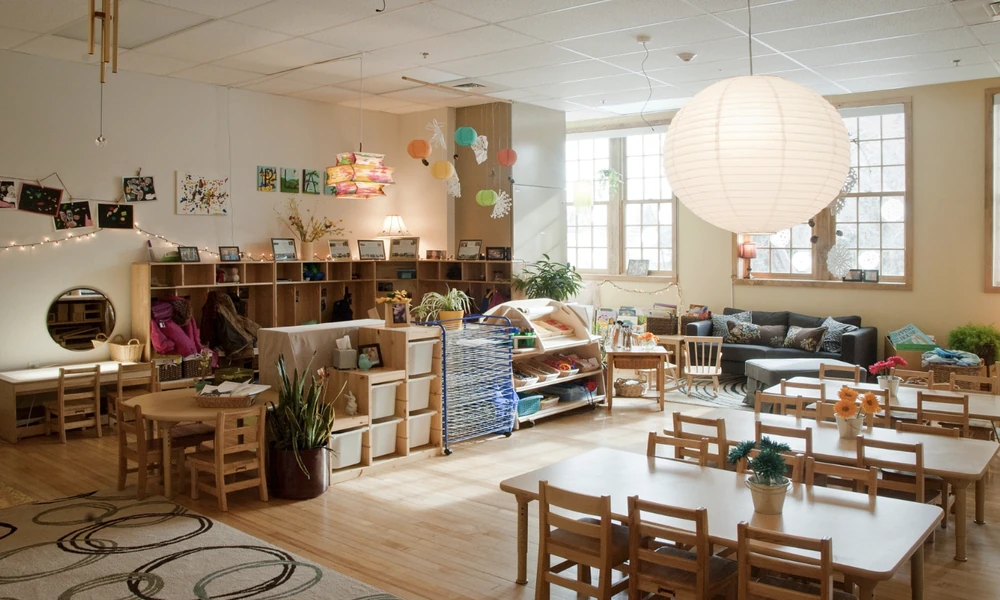
Setting Up Flexible Activity Stations
An activity station is a defined area with one type of material and a loose purpose. Common examples include:
- Building and construction, such as blocks, interlocking bricks and simple ramps
- Early numeracy, such as counters, sorting trays and number cards
- Language and storytelling, such as picture books, puppets and story cards
- Sensory exploration, such as textured materials, sound makers, and pouring and scooping
For a small group of six to ten children, three or four activity stations are usually manageable. More than that spreads adult attention thin and makes tidying up a chore. At home, two stations made from a low shelf and a floor mat can work just as well.
Keep materials visible and within reach. Open shelves and clear tubs let children see what is available and choose without asking. That choice matters, because a child who is drawn to a station is more likely to stay with it.
Let children stay at a station for as long as they are engaged, and let them return the next day. A child who goes back to the construction station five days running is not falling behind. They may be working something out, and repetition is often how that happens.
Graduated Difficulty: Sequencing Toys from Simple to Complex
Graduated difficulty means arranging materials in small steps, so that each one asks a little more of the child than the last. Within each activity station, toys are ordered from simple to complex instead of being mixed together in one tub.
Here are some examples of steps:
- Puzzles: 4-piece inset puzzles, then 12-piece puzzles, then 24-piece puzzles without a picture guide
- Shapes and patterns: shape sorters first, then copying a simple block pattern, then extending a pattern without a model
- Numeracy: counting real objects, then matching objects to dot cards, then matching them to numeral cards
Offer one step up at a time instead of a big jump. If a child finishes a 12-piece puzzle quickly and calmly, try a 16- or 20-piece puzzle before reaching for a 48-piece one. A large jump tends to turn curiosity into frustration.
A simple way to build a sequence is to look through a supplier’s catalogue with your stations in mind. You might browse CPS-Toys’ educational toy range, for instance, and sort what you find into simple, intermediate and advanced steps for each station. Where an item fits in your own sequence matters more than the label on the box, and many homes and classrooms already own enough to fill the first few steps.
Shelving can reflect the sequence. Put easier items on the left and harder ones on the right, or use colour-coded tubs. Children often start to notice the order themselves and reach for the next step when they feel ready.
Sensory Play for Children Who Need a Different Entry Point
Some children engage more readily through touch, sound and movement before they settle into a structured task. Sand, water, play dough, textured fabrics and simple percussion instruments give those children a way in. Sensory play can also offer a quieter spot for a child who needs a short break from a busier station.
Treat sensory exploration as an activity station of its own, with its own easier and harder steps. Free pouring might come before measuring with cups, and feeling different textures might come before sorting them into rough and smooth. Keep your expectations general. Sensory materials are one option among several, not a fix for any particular difficulty. If you have concerns about a child’s development, a health professional is the right person to ask.
What to Watch For: Teacher and Parent Observation
Observation turns stations and sequences into decisions. A short checklist is enough:
- How long does the child stay with the task?
- Do they finish it independently, with help, or not at all?
- Do you see signs of frustration, such as pushing pieces away or asking to stop, or signs of boredom, such as rushing or wandering off?
- Do they invent new uses for the toy, such as turning puzzle pieces into characters in a story?
Jot brief notes over a week or two: the date, the station, the step, and a word or two for each question. Patterns matter more than any single session. A tired or unwell child may struggle with something they managed easily the day before.
Then use the notes to choose one of three moves:
- Move up a step if the child finishes the task independently on several days and starts inventing new uses for it.
- Stay at the same level if they finish with some help and seem content.
- Offer an easier option if frustration shows up repeatedly, and try the harder step again in a week or two.
Common Mistakes When Matching Toys to Pace
- Choosing by age label alone. Age ranges on packaging are a rough guide. They do not measure an individual child.
- Rotating too often. Swapping every toy every few days stops children from building familiarity. Changing a few items at a time keeps things fresh without losing that.
- Rushing a confident child. Speed and understanding are different things. Let a quick finisher show they can do a task reliably before moving them up.
- Treating repetition as lack of progress. Repeating a task often builds fluency and confidence.
- Comparing children aloud. Remarks about who is ‘on the harder puzzle’ can turn a sequence into a race.
Resource List for Building a Pace-Friendly Play Space
- Station planning template: a one-page grid listing each activity station, its materials, and three columns for simple, intermediate and advanced steps.
- Observation note format: a weekly table with one row per child and columns for station, step, time on task, independence and comments.
- Educational toys by skill level: the supplier range mentioned in the graduated difficulty section, as a starting point for spotting gaps in your sequences.
- Sensory materials: sensory play options from CPS-Toys, useful to browse for textures, sound and movement-based materials when filling out a sensory station.
If you change only one thing this week, take the toys you already have and line up each type from easiest to hardest. Then watch for a fortnight and write down what you see. Those notes will tell you more about each child’s pace than any age label, and they will show you which single next step is worth offering.