
Key Highlights
- Bridging the gap between theoretical classroom concepts and real-world scenarios.
- The vital role of active learning in improving student retention rates.
- Encouraging critical thinking through practical applications of complex topics.
- Why personalised academic support is essential for mastering difficult subjects.
Introduction
In the landscape of modern education, students are frequently faced with the challenge of navigating abstract concepts. Whether it is the intricacies of mathematical theory, historical patterns, or complex scientific phenomena, the leap from a textbook definition to a tangible understanding can be significant. Secondary education is a pivotal time where students transition from concrete thinkers to those who can grasp complex, theoretical ideas. However, without a bridge to the real world, these concepts often remain distant and difficult to internalise. This is where practical application becomes the cornerstone of effective learning, transforming the passive intake of information into active, lifelong knowledge.
The Science of Understanding
Cognitive research consistently shows that the human brain retains information more effectively when it is contextualised. When a student learns a new concept in isolation, it is easily forgotten because it lacks a hook or an anchor in their existing mental framework. By integrating practical examples into the curriculum, educators provide that much-needed anchor. For students who may be finding certain topics overwhelming, seeking out additional resources or structured support such as secondary tuition can offer the necessary environment to explore these ideas in greater depth. When theoretical models are paired with physical experiments or real-life problems, the neural pathways associated with that knowledge are strengthened, making the information more accessible and meaningful.
Bridging the Gap in Science Education
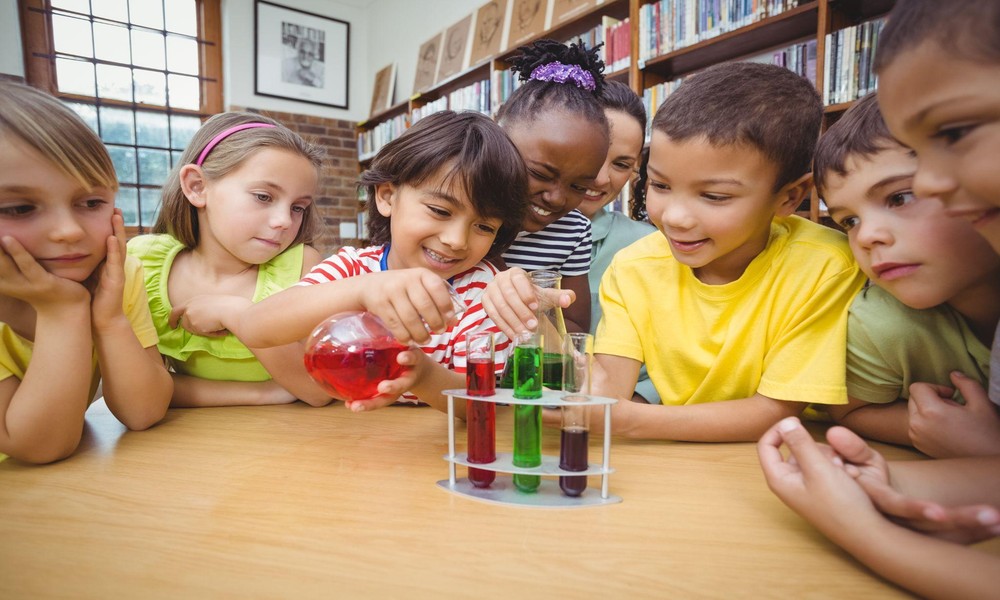
Science is perhaps the most vivid example of where abstract concepts thrive and where they can also confuse. Atoms, molecular bonds, and reactions are invisible to the naked eye. Relying solely on diagrams and lectures can create a barrier to true comprehension. This is why subjects like science, particularly through the focused approach of secondary chemistry tuition, benefit greatly from laboratory work and practical demonstrations. By seeing a reaction take place, witnessing the change in state, or calculating real-world reaction rates, a student transforms from an observer of abstract data into an active participant. This transformation is vital for building confidence and interest in STEM subjects.
Why Engagement Matters
Beyond mere retention, engagement is the heartbeat of a successful education. When students understand why a topic matters, their motivation increases naturally. Practical application provides the “why”. When a student can connect the algebra they are learning in class to predicting the trajectory of a sports ball, or link chemical bonding to the materials used in modern technology, the subject matter comes alive. This relevance reduces the feeling of disconnection that often plagues secondary education. It turns the academic experience into an investigation of the world rather than a sequence of exams to be passed.
Cultivating Academic Success
Ultimately, the goal of secondary education is not just to transfer information but to cultivate the ability to think critically and apply knowledge to new and novel situations. Teachers and mentors who prioritise practical application are teaching students how to think, rather than just what to think. While traditional classroom settings are important, they are often constrained by time and rigid syllabi. Supplementary support systems allow students the time to slow down, ask questions, and explore the “what if” scenarios that school hours often do not permit. By fostering an environment where practical exploration is encouraged, we empower students to take ownership of their learning journey.
Conclusion
Breaking down abstract concepts is not about simplifying the curriculum, but rather enriching it. By consistently tying theoretical knowledge to real-world applications, educators and students alike can foster a deeper, more robust understanding of the world. Through the use of practical examples, hands-on learning, and tailored support, we can ensure that secondary education remains a transformative period of growth. Embracing these methods encourages curiosity, persistence, and academic confidence, setting students up for success long after they leave the classroom.
Are you looking to help your child bridge the gap between theory and practice? At Simply Education, we provide dedicated support to help students master complex concepts and build lasting academic confidence. Contact us today to learn more about our programmes and how we can support your child’s journey towards excellence.